· 15 min read
Elise Louvel — Jeevantika Lingalwar
Jeevantika Lingalwar on AI leadership, building International Women in Tech, and creating global opportunities for women in STEM.


Written in by Elise Louvel Co-Founder
“My journey into AI wasn’t through coding. I started by asking questions, bridging knowledge gaps, and making AI more accessible to non-technical professionals.” – Ideja Bajra
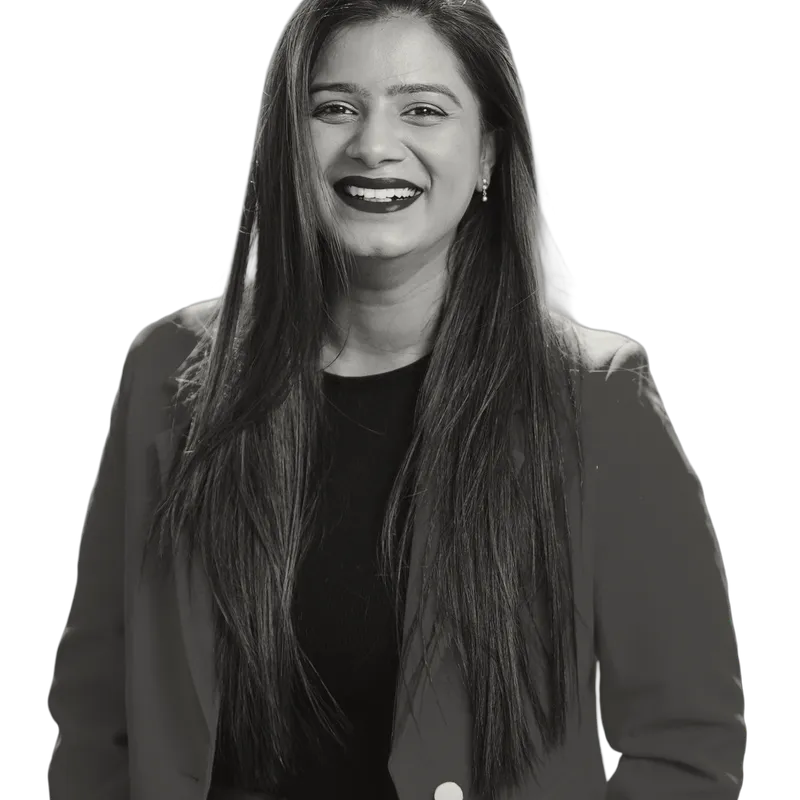
I’m Ideja Bajra, the founder of Edvance AI, an upskilling AI implementation company that helps businesses and SMEs navigate the AI revolution, powered by Gen Z.
I come from a non-traditional AI background and am currently studying cell biology at university in Scotland, which has given me a unique perspective on how AI intersects with science, education, and business.
But entrepreneurship isn’t new to me. I’ve been leading initiatives since I was 15. I founded a nonprofit that connects students from Kosovo and the UK through education and mentoring, Based In Science, which taught me how to build from scratch, navigate challenges, and turn ideas into action. Now, through Edvance AI, I’m on a mission to ensure AI education isn’t just for engineers, but for everyone who wants to thrive in this new era.
How did you enter the AI space?
I found out about ChatGPT nearly three years ago. I saw it trending across LinkedIn and was also picking up on conversations about the tool at my university. I then started using ChatGPT, and from that moment on, I realised that the way we study, learn, work, and even possibly live was going to fundamentally change.
This then helped me to build a startup in the AI space when I was part of a women in STEM business accelerator. I worked to upskill myself on AI first, and then realised this is where the niche and gap is.
What do you enjoy outside of work?
I love anything that allows me to enter a state of creative release. Often, it’s journaling, writing, reading, painting, or drawing, but travel is my absolute favourite. I love learning about new cultures and seeing a country through the eyes of a local.
What obstacles have you overcome?
Being a woman in such a male-dominated space, because unfortunately even AI is, if you look at it from a more startup, technical, or educational perspective, was initially hard to enter into. And attempting to juggle this entirely new field alongside my degree, for context, I am in my final semester of a cell biology undergraduate degree, was tough to manage in the early days. There were definitely a lot more late nights than normal while adjusting to this change.
Where did you turn for help?
Some incredible mentors in the AI space who were also building AI agencies to support businesses with implementation. I found them through an AI YouTuber’s online community in 2023, and they are still my mentors to this day. I also reached out to a lot of education and EdTech mentors on LinkedIn.
It started with me finding people I looked up to in those industries and taking the initiative to ask for their guidance, and then blossomed into frequent mentoring to this day, along with support from my incredible family members.
What is a mentorship moment that changed your career, and how did it shape your approach to leadership or problem-solving?
Being told that I have natural speaking and commercial abilities, but that I just need full confidence to express them, completely rewired my brain. Especially as a woman, pricing, money, and finances are never easy topics to navigate, so being told that I already had those skills by a seasoned professional in AI was empowering.
What is the most valuable lesson you have learned from mentoring others, and how has it impacted your work?
Understanding that there is no “right way” to do something, and that everyone’s path is highly individualised. From that moment, I realised that a good mentor will never simply tell their mentee what to do, but will offer strategic guidance or share their story in the hope of inspiring them, because every journey is different.
What is a skill outside of tech that made you a better technical expert?
Communication, actually. Being able to explain complex things in a really simple and easy-to-understand manner makes all the difference in this field. A lot of the time, the very technically driven researchers or people in this space struggle to communicate advancements or ideas to a lay audience, which increases the barriers for people to learn more about and understand AI from the ground up. I have a strong mission to change that with the AI videos I post.
What book, movie, or podcast has significantly shaped your thinking?
Not AI-related, but Start with Why really shaped why I love talking about AI, and it ultimately led to the creation of my AI startup.
Was there ever a time you felt like giving up? How did you push through? What kept you going?
Absolutely, especially in the super early days. I started out building AI solutions for EdTech companies, but I soon realised that there were many compliance and regulatory barriers to bypass when effectively integrating such systems, and that this market was severely underfunded.
I then had to pivot into more of an AI upskilling and consultancy component in the summer of 2024, and that’s when I realised I had found my niche.
Before this pivot, I was juggling university and business trips to London, and had strong moments of stress and panic until the load of exams started to lighten. My friends and mentors, who were checking in with me during this period, helped me keep going.
If you had to describe AI with one metaphor, what would it be and why?
AI is like an orchestra conductor. It doesn’t replace the musicians, but enhances how they play together, ensuring harmony, efficiency, and precision. Just as a conductor brings out the best in an ensemble without playing an instrument, AI optimises human potential by streamlining tasks, uncovering insights, and augmenting creativity, but the music still depends on us.
In your opinion, what is a currently underappreciated AI innovation or trend that should be getting more attention?
One overlooked trend is AI for accessibility, especially in making workplaces, education, and digital spaces more inclusive. From real-time captioning for deaf users to AI-generated tactile graphics for visually impaired learners, these innovations have the power to reshape how people interact with technology. However, they often receive less attention than the latest generative AI breakthroughs. We should be focusing more on AI that empowers marginalised communities, not just automates workflows.
What do you consider the most significant ethical challenge AI faces right now, and how should we address it?
Whether in hiring, finance, or healthcare, biased datasets lead to skewed AI decisions that perpetuate inequalities. We need stronger transparency, diverse data representation, and accountability mechanisms to prevent AI from amplifying human prejudices. Companies should treat AI models like financial audits: regularly checked, stress-tested, and openly reported. AI isn’t neutral, so it’s on us to course-correct.
What is the biggest current myth about AI that you wish to debunk, and why?
Myth: AI will replace humans.
Reality: AI will replace tasks, not people, unless people refuse to upskill.
The idea that AI is an unstoppable force taking over jobs ignores a key factor: AI still needs human oversight, creativity, and ethical judgment. Rather than fearing automation, individuals and companies should focus on AI upskilling and integrate AI as a collaborator rather than a competitor. The future belongs to those who know how to work with AI, not against it.
How do you handle data quality issues when training AI models, and what steps do you take to ensure the data is suitable for model building?
Ensuring high-quality data is the foundation of a reliable AI model. I approach data quality issues by implementing a structured pipeline that includes data validation, bias detection, and continuous refinement.
Key steps I follow:
If you were building an AI tool from scratch, which frameworks, languages, or tools would you choose? Could you explain the reasoning behind your choices in regard to your experience or personal projects?
For an AI-powered upskilling tool, I’d choose:
Since my focus is AI upskilling, these tools would allow me to create a highly interactive, explainable AI platform that personalises learning while maintaining transparency and adaptability.
Could you share an experience where you had to make an unconventional decision that went against popular opinion or current trends on an AI project? How did you navigate that situation?
When I started Edvance AI, many believed AI education should be purely technical, focused on coding and machine learning algorithms. However, I saw a gap: non-technical professionals were being left behind in AI adoption.
Instead of following the traditional AI training route, I focused on upskilling entire teams, making AI practical, understandable, and directly applicable without requiring deep technical expertise.
Navigating this required:
· 15 min read
Jeevantika Lingalwar on AI leadership, building International Women in Tech, and creating global opportunities for women in STEM.

· 12 min read
AI expert Stefania Pecore on responsible AI, language and logic in machine learning, and building technology that is grounded in real human context.

· 5 min read
Claire Derelle on entering AI from a non-technical path, building confidence in leadership, and approaching innovation with curiosity, creativity, and resilience.
Subscribe to our newsletter to get the latest updates on our blog and podcasts.