· 9 min read
Elise Louvel — Ideja Bajra
Founder of EdvanceAI on making AI accessible to non-technical professionals, leading through communication, and building practical AI education.

Written in by Elise Louvel Co-Founder
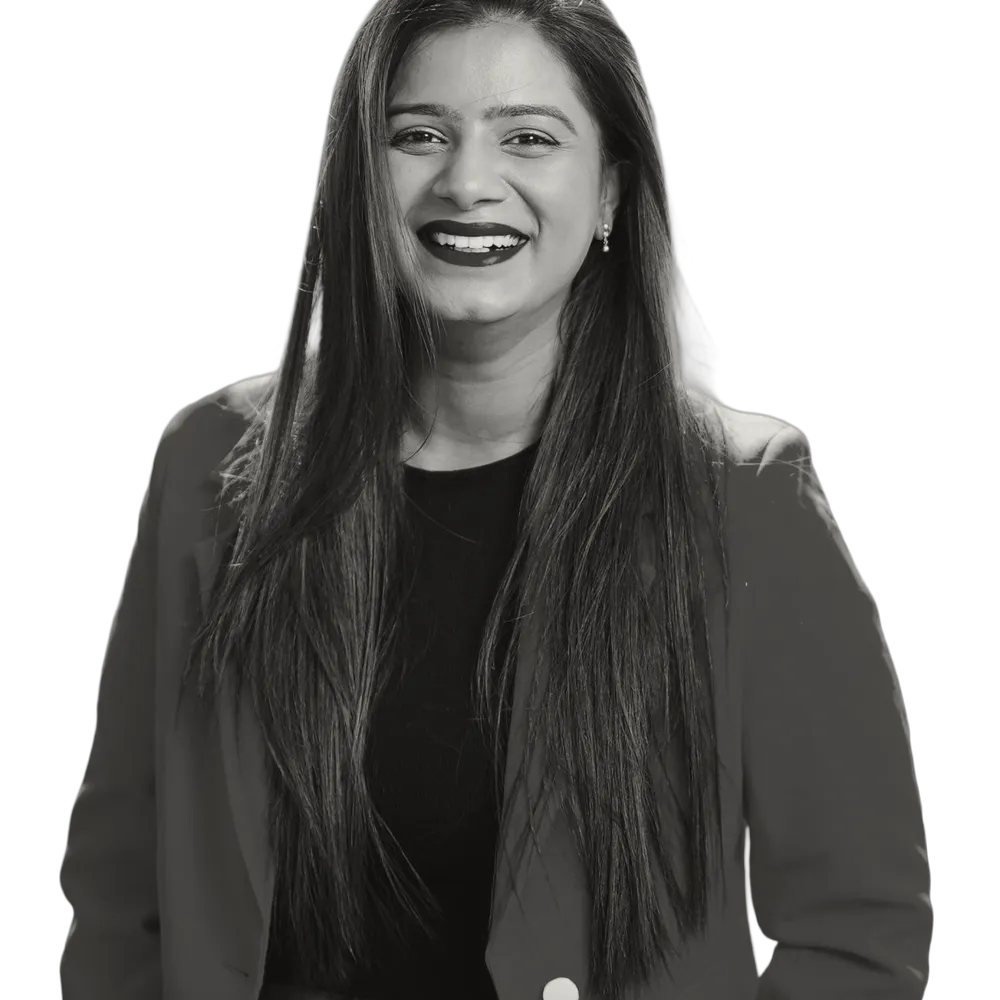
My parents were my first role models.” – Jeevantika
Could you introduce yourself?
I’m Jeevantika Lingalwar, currently serving as Head of AI Business Applications at HCS. My journey in technology began with a deep curiosity about how innovation can transform lives. Over the years, I’ve worked across multiple domains—cloud computing, AI, and business strategy—while advocating for diversity and inclusion in tech. I’m also the founder of International Women in Tech, a global community of over 8,000 members, dedicated to empowering women in STEM through mentorship, networking, and knowledge sharing.
You recently became Head of AI Business at HCS, what does it mean in practice? How does it differ from your former role of Partner Solution Architect and AI Business Solutions at Microsoft?
This role is about strategic leadership and impact. At HCS, I focus on helping organizations harness AI to drive business transformation—aligning technology with measurable outcomes, building ethical AI frameworks, and ensuring adoption at scale. Compared to my previous role as Partner Solution Architect at Microsoft, which was more technical and partner-centric, this position requires a broader vision: shaping AI-driven strategies, influencing decision-making at the executive level, and driving innovation across industries.
How did you choose to go for Engineering studies?
Growing up in India, I was fascinated by technology’s ability to solve real-world problems. Engineering felt like the perfect blend of creativity and logic—a way to turn ideas into impactful solutions. It wasn’t just about coding; it was about building something meaningful.
Did you have any mentor or role model?
Yes, mentors have been pivotal throughout my journey. My parents were my first role models, instilling resilience and ambition. Later, industry leaders and peers guided me through career transitions and inspired me to aim higher. Mentorship taught me that success is rarely a solo journey—it’s built on shared wisdom.
What are resources or people who have helped you achieve your dreams?
Various Communities, continuous learning platforms, mentors, role models and supportive colleagues have been invaluable. Networking opened doors I never imagined, and online resources like LinkedIn learning and Microsoft Learn helped me stay ahead in a rapidly evolving tech landscape.
Have you had to learn and upgrade your skillset since you have started your career?
Absolutely! Technology evolves at lightning speed. I’ve consistently upskilled in cloud computing, AI, leadership, and business strategy. Certifications, hands-on projects, and learning from real-world challenges have kept me relevant and confident in my expertise.
You have worked in different fields of Tech like Cloud or AI, which sparked the most passion for you?
AI is my true passion because of its transformative potential. It’s not just technology—it’s a catalyst for innovation across industries, from healthcare to finance. AI has the power to solve complex problems and create opportunities we never thought possible.
You have been an ambassador for the Women in Tech for a long time. What does it mean to be an Ambassador?
Being an ambassador for Women in Tech is about advocacy, mentorship, and creating impact. It means representing a global movement that champions diversity and inclusion in technology. As an ambassador, I’ve had the privilege to mentor women, share knowledge through webinars and talks, and amplify voices that often go unheard. It’s not just a title—it’s a responsibility to inspire and empower others to pursue careers in tech confidently.
What has that network brought to you?
Women in Tech Network has been a transformative experience for me. It connected me with an incredible global community of professionals who share the same vision of inclusion. Through this network, I’ve built lifelong relationships, collaborated on impactful projects, and gained access to opportunities that broadened my perspective. It also gave me a platform to share my story, which in turn inspired others—and that’s the most rewarding part
Was the Unplanned Journey inspired by your involvement in the Women in Tech network? Why have you decided to stop?
Not completely. The Unplanned Journey is deeply rooted in my personal experiences and conversations with many people who resonated with similar paths of resilience and growth. It was created to share authentic stories that inspire others to embrace uncertainty and turn challenges into opportunities. It’s not an end—just a strategic pause now. I decided to temporarily step back to focus on scaling International Women in Tech and other initiatives that can create a broader impact. The vision behind Unplanned Journey remains alive, and I look forward to bringing it back when the time is right.
Nearly 7 years ago, you founded International Women In Tech. What was your primary aim?
My primary aim was simple yet powerful: to create a global community where women feel empowered to lead and innovate in technology. I wanted to build a space where women could access mentorship, resources, and opportunities without barriers. Representation matters, and I wanted to ensure that women everywhere had a platform to thrive.
What kind of actions or activities do International Women in Tech lead?
We organize mentorship programs, webinars, networking events, and global summits. Our initiatives focus on skill-building, leadership development, and creating visibility for women in tech. We also run campaigns to highlight success stories and provide resources for career growth. Recently, we’ve launched programs connecting women with industry leaders for one-on-one guidance.
What is a milestone or event you were particularly proud of?
One milestone that stands out is reaching 8,000 members globally. It’s more than a number—it’s a testament to the power of community and collaboration. Another proud moment was hosting our Global Women in Tech event, which brought together women from over 50 countries to share insights, learn, and network. Seeing the impact of these events—the confidence they instil and the opportunities they create—is what keeps me motivated.
How has becoming a founder helped your career? What skills have you gained?
Becoming a founder has been one of the most transformative experiences of my career. It taught me entrepreneurial thinking, strategic planning, and leadership beyond the corporate lens. Unlike structured roles in large organizations, founding a global community required me to build everything from scratch—vision, mission, operations, and engagement strategies.
I gained skills in community building, stakeholder management, public speaking, and digital branding. It also strengthened my ability to adapt quickly, make decisions under uncertainty, and lead with empathy. These skills have been invaluable in my corporate leadership roles because they foster innovation and resilience.
Can anyone join? How can one get into this community?
Absolutely! International Women in Tech is open to anyone passionate about diversity and inclusion in technology—women, men, and allies. Joining is simple: • Connect with us on LinkedIn or visit our official website. • Participate in our mentorship programs, webinars, and networking events. We believe inclusion is a collective effort, so everyone who shares this vision is welcome.
From advocating for inclusion in the WomenTech network to your podcast or your mentorship initiative “Coffee Chat with Jeevantika,” you have contributed in many ways to making women in STEM feel welcome and supported. Why is this cause so dear to you?
This cause is deeply personal. I’ve seen talented women hesitate or step back because they lacked support or representation. Early in my career, I faced similar challenges—navigating male-dominated spaces, questioning my own capabilities. Those experiences shaped my mission: to ensure no woman feels alone in her tech journey.
Through initiatives like Coffee Chat with Jeevantika, I wanted to create safe spaces for honest conversations, mentorship, and guidance. Empowering women in STEM isn’t just about fairness—it’s about unlocking innovation. Diverse teams build better solutions, and I want to be part of that change.
Through our exchanges, it has become clear that you value diversity and that you consider including everyone crucial to move forward and innovate. How do you view the restrictions many companies have put on D&I departments? How should people for whom these topics matter navigate these changes?
The recent restrictions on D&I departments are concerning because diversity is not a checkbox—it’s a business imperative. Innovation thrives when different perspectives come together. Limiting D&I efforts risks slowing progress and reducing competitiveness. For individuals passionate about these topics, my advice is: • Keep advocating internally—even small actions like inclusive hiring practices or mentorship can make a difference. • Leverage external communities like International Women in Tech to continue driving change. • Educate leadership on the tangible benefits of diversity—better decision-making, stronger innovation, and improved business outcomes. Change often starts from the ground up, and persistence matters.
An important part of your journey was you moving from India to Ireland for your Master. What motivated that choice?
Moving from India to Ireland for my Master’s was a decision driven by ambition and curiosity. I wanted global exposure, a chance to learn in a multicultural environment, and to challenge myself beyond my comfort zone. Ireland offered a strong tech ecosystem and academic excellence, making it the perfect destination to broaden my horizons and prepare for an international career.
Did you notice any shocking difference between these two countries may that be culturally, in their mindset or in the academic/professional world?
Yes, moving to Ireland was an enriching experience that exposed me to new perspectives. • Culturally: I found Ireland to have a very open and collaborative environment where building relationships and networking is highly encouraged. It was wonderful to experience such warmth and inclusivity. • Mindset: There is a strong emphasis on work-life balance and mental well-being, which I truly appreciated. It taught me the importance of creating harmony between personal and professional life. • Academic/Professional: The education system here places a lot of focus on critical thinking and practical application, which complemented my previous learning and helped me grow further. Professionally, I observed a strong drive for innovation and inclusivity, which inspired me to think bigger and embrace global collaboration. Both countries have their own strengths, and experiencing these differences broadened my perspective and helped me become more adaptable and empathetic in my approach.
How much has this step of your journey impacted your desire to found International Women In Tech?
This move was pivotal. Experiencing a new culture and seeing the challenges faced by women in tech globally made me realize the need for a supportive, international community. I wanted to create a platform where women could connect, share experiences, and access opportunities regardless of geography. That vision became International Women in Tech, which now connects thousands of women worldwide.
What advice would you give to other foreigners coming to Ireland?
-Be open to learning and adapting. Embrace cultural differences—they enrich your perspective. -Network actively. Ireland’s tech ecosystem thrives on connections, so attend events and engage with communities. -Ask for help when needed. People here are welcoming, kind and supportive, so don’t hesitate to reach out. -Stay curious and proactive. Opportunities often come to those who seek them.
Would you ever come back in India for your career?
India will always hold a special place in my heart—it’s where my journey began and where I built the foundation for everything I do today. The country’s tech ecosystem is thriving with innovation and opportunities, and I deeply value staying connected to that growth. At this stage, my focus is on global impact, but I believe careers are dynamic and full of possibilities. Whether through collaborations, mentorship, or future projects, I’m always open to contributing to India’s technology landscape in meaningful ways. For me, it’s less about geography and more about purpose and impact.
Your involvement and expertise from paving the way for women in Tech to becoming a skilled leader in your field has been rewarded by nominations, award and talks. Firstly, how does one get nominated for these awards? Do you have to submit your own application or are others submitting your name?
It varies by award. Some require self-nomination or application, where you share your achievements and contributions. Others are based on peer nominations or industry recognition, which is always a humbling experience because it means someone values your work enough to put your name forward. In many cases, it’s a mix of both—visibility and impact play a big role.
You have won 4 awards. First, the WomenTech Ambassador Global Award 2021, then you were named the Top Voice of New Era of Leaders 2024, and recently you were awarded the Most influential visionary leaders in business 2025. Could you tell us more about each of these awards and what they represented for you?
I’ve been honored to receive four major awards that hold deep meaning for me: • WomenTech Ambassador Global Award (2021): This was incredibly special because it recognized my advocacy for women in technology and my efforts to mentor and empower others. It validated the mission behind International Women in Tech and reinforced why representation matters. • Top Voice of New Era of Leaders (2024): This award celebrated thought leadership—sharing insights on AI, innovation, and inclusion. It reminded me that leadership today is about influence and impact, not just titles. • Most Influential Visionary Leaders in Business (2025): This was a milestone because it acknowledged my role in driving AI adoption and shaping business strategies. It represented the intersection of technology and leadership, which is where my passion lies. • Influential Diversity, Equity & Inclusion Leaders Powering the Future of Business (2025): This recent recognition means a lot because it highlights my commitment to creating inclusive spaces in tech and business. Diversity is not just a value—it’s a driver of innovation, and this award reinforced that belief.
You have also been a finalist and a nominee in many other awards. Could you explain the difference between those two titles?
I’ve also been a finalist for numerous awards, including two-time Rising Star of the Year, Role Model of the Year, and Tech Leader of the Year. The difference? A nominee is someone considered for an award, often among a large pool of candidates. A finalist means you’ve been shortlisted as one of the top contenders, which is already a significant recognition. Both are honours because they reflect the impact of your work.
Has any of these nominations surprised you? Have you ever learnt from other finalists?
Yes, some nominations were unexpected and deeply humbling. They reminded me that the work we do often resonates beyond what we see. Learning from other finalists has been one of the most enriching parts of the process. Each finalist brings a unique story and perspective, and those interactions have taught me new approaches to leadership, innovation, and advocacy.
You have also held a TedTalk. What was the process like?
Delivering a TED Talk is an incredible experience, but it’s also a rigorous process. It started with an application and a clear articulation of the idea worth spreading. Once selected, I worked closely with the TEDx team to refine the narrative, structure the talk, and ensure it aligned with the TEDx format. There were multiple rehearsals and a strong emphasis on storytelling—because TED Talks are not just about sharing information, they’re about inspiring change.
What was it about and how did you pick that topic?
My TED Talk was titled “Unveiling the Unplanned Journey of a Woman in Tech.” It focused on the unpredictable yet empowering path that many women experience in technology—how challenges, setbacks, and unexpected turns can lead to growth and success. I chose this topic because it reflects my own story and resonates with countless others who have navigated similar journeys. It’s deeply personal yet universally relevant. I wanted to use that platform to share the message that uncertainty is not a barrier—it’s an opportunity to innovate, adapt, and thrive.
Did you have stage fright?
Absolutely! Standing on that iconic red dot is both exhilarating and intimidating. But I reminded myself why I was there—to share a message that could inspire others. Once I started speaking, passion took over fear. The energy of the audience and the purpose behind the talk helped me overcome any nervousness.
Is that Tedtalk available to see anywhere?
Yes, it’s available on the official TEDx platform and YouTube. I often share the link during events and on my LinkedIn profile for those who want to watch and engage with the ideas discussed.
Has any other TEDtalk have an impact on you?
Yes, Talks like “The Power of Vulnerability” by Brené Brown and “How Great Leaders Inspire Action” by Simon Sinek. It’s a powerful talk about the concept of starting with “Why” and how purpose-driven leadership can inspire teams and organizations to achieve extraordinary results. This talk reinforced my belief that leadership in technology isn’t just about driving innovation—it’s about creating a vision that people believe in and feel connected to. In my own journey, whether leading AI initiatives or building communities like International Women in Tech, I’ve seen how clarity of purpose can transform outcomes and empower people to go beyond their limits.
You have shared that your mantra is : “I do not fear losing, I fear not trying”. Could you explain the vision behind this mantra?
This mantra reflects my belief that the greatest risk in life is not failure—it’s inaction. Every opportunity I’ve embraced, even when uncertain, has taught me something valuable and shaped who I am today. Losing is temporary, but not trying means missing out on growth, learning, and the chance to make an impact. For me, courage is not the absence of fear—it’s the decision to move forward despite it.
If you had to share one last quote or mantra with our readers, what would it be?
“Your journey doesn’t have to be perfect to be powerful.” I believe that success is rarely linear. It’s the unplanned turns, the challenges, and the resilience that make the journey meaningful. Embrace imperfection, because that’s where innovation and transformation happen.
· 9 min read
Founder of EdvanceAI on making AI accessible to non-technical professionals, leading through communication, and building practical AI education.
· 12 min read
AI expert Stefania Pecore on responsible AI, language and logic in machine learning, and building technology that is grounded in real human context.
· 5 min read
Claire Derelle on entering AI from a non-technical path, building confidence in leadership, and approaching innovation with curiosity, creativity, and resilience.
Subscribe to our newsletter to get the latest updates on our blog and podcasts.